Introduction
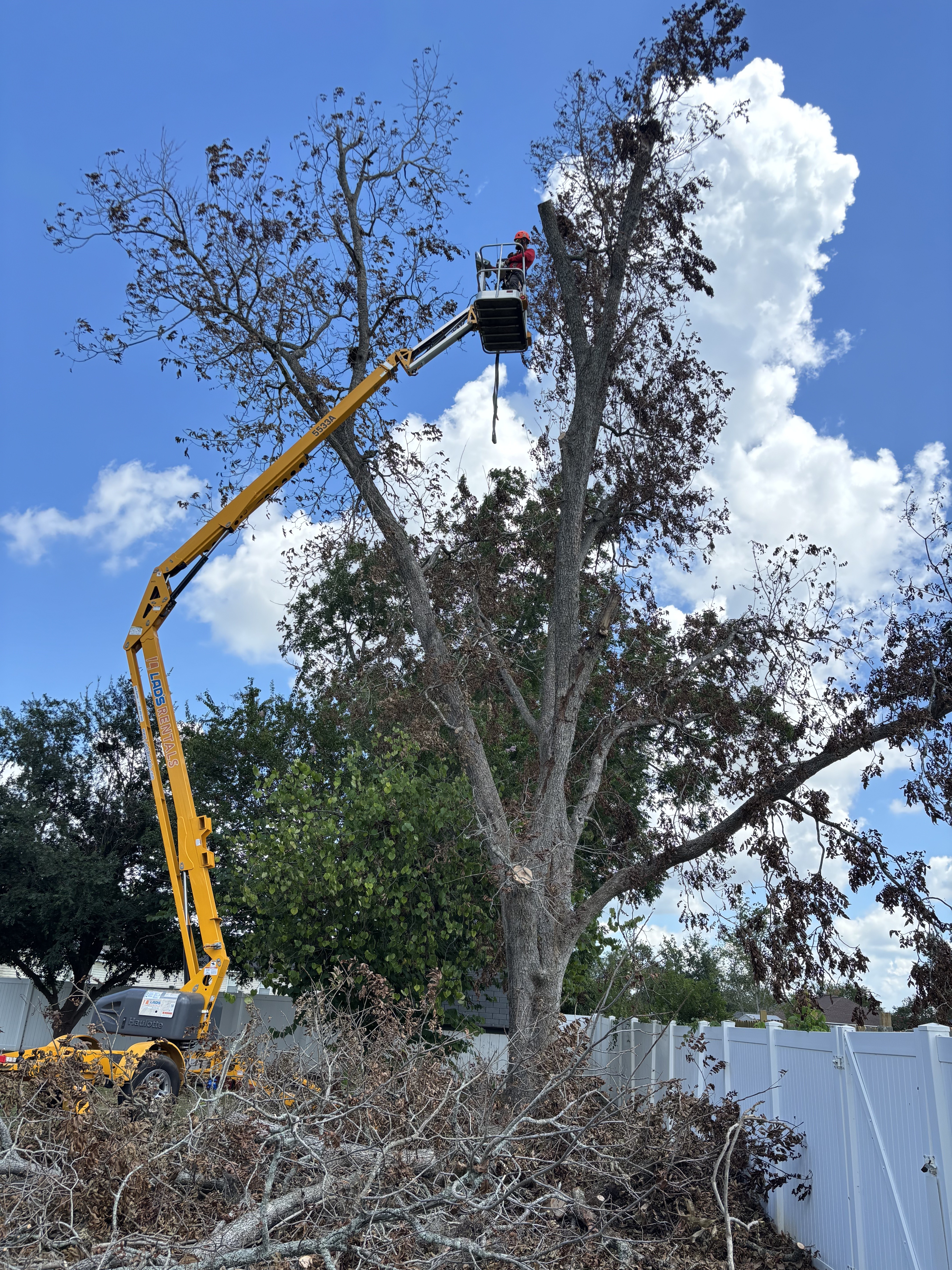
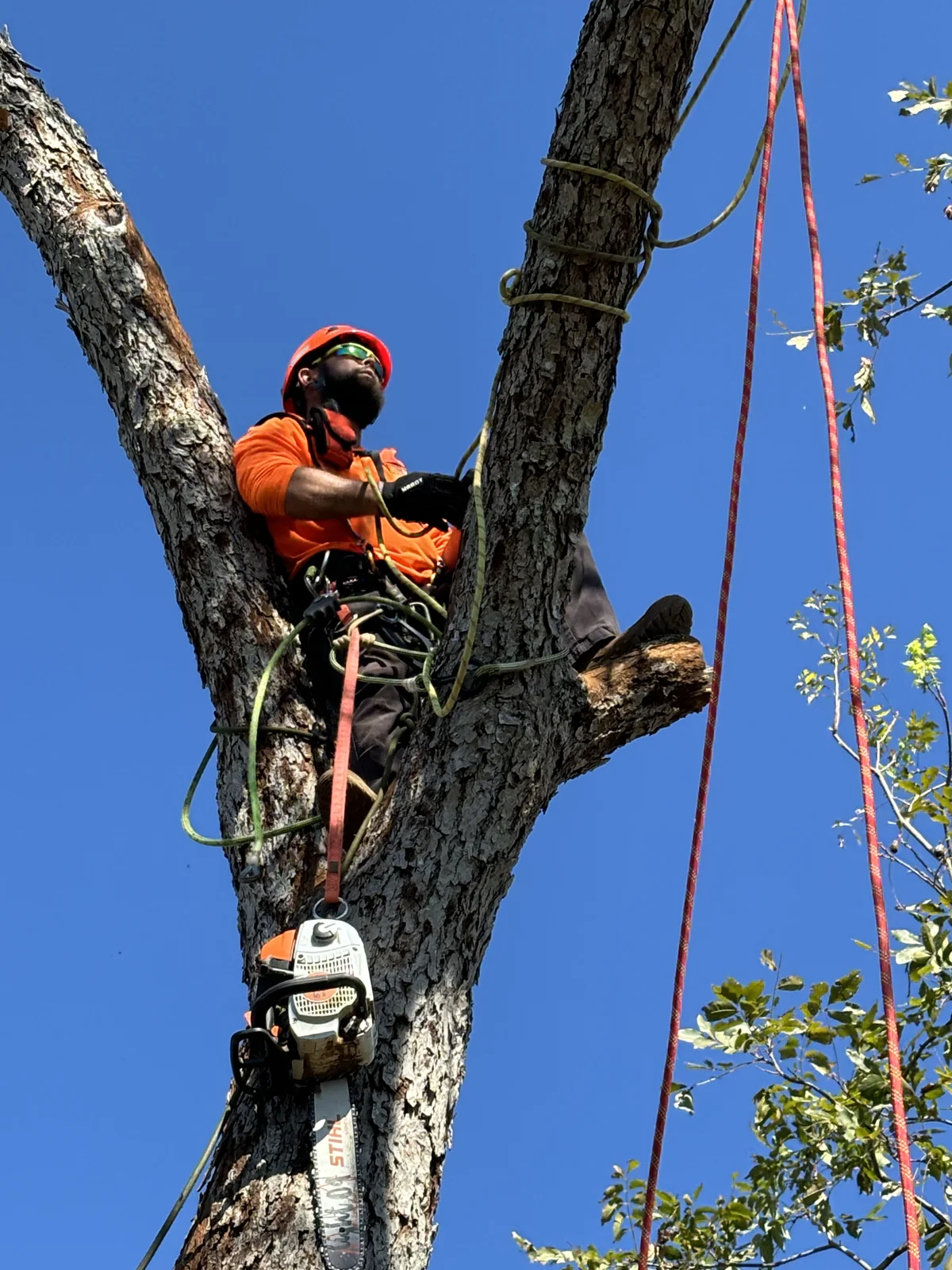
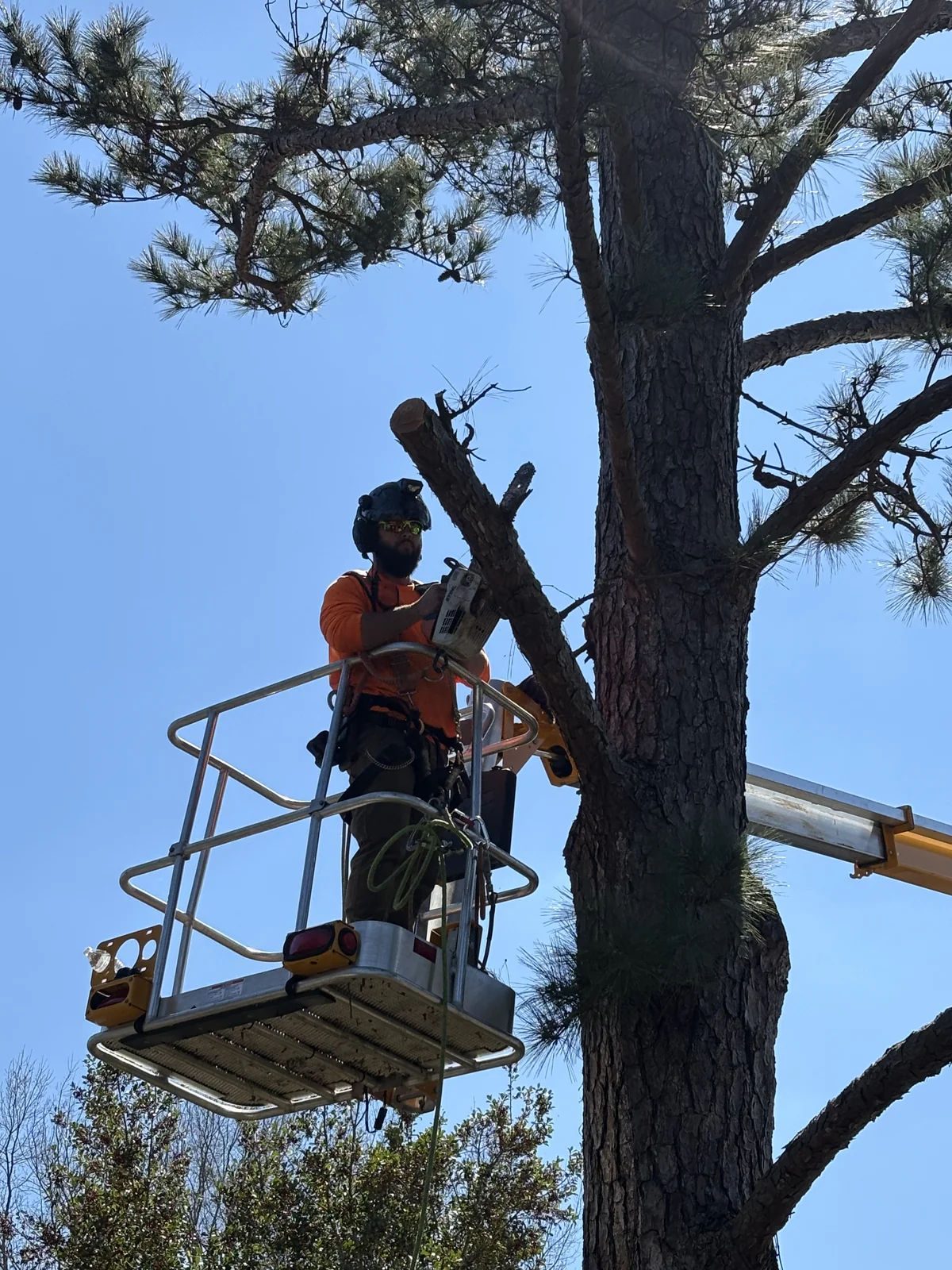
In South Georgia, we deal with high winds, saturated soil, and heavy storms. For a homeowner, a large tree is a beautiful asset—until it becomes a liability. Identifying a hazardous tree before it falls is the difference between a routine removal and an expensive emergency roof repair.
In this guide, we’ll walk you through the technical signs that a tree has moved from 'stately' to 'dangerous.'
The Lean Test
Frequency: Check after every major storm
Not all leaning trees are dangerous, but a new lean is a major red flag. If the soil at the base is lifting (heaving) or if there are fresh cracks in the ground around the roots, the tree is losing its structural grip. This requires immediate technical intervention.
The Canopy 'Dieback'
Frequency: Seasonal Observation
Look at the very top of the tree. If the branches are bare while the rest of the tree is green, the tree is experiencing 'dieback.' This is often a symptom of root stress or disease, meaning the tree can no longer support its own height.
The Hollow Truth
Trunk cavities and large holes are more than just homes for squirrels; they are structural weaknesses. If a tree is significantly hollow, it lacks the 'compression strength' to stand up to hurricane-force winds.
“A tree can look healthy on the outside while being hollow on the inside. Understanding the structural mechanics of a tree is what keeps your home safe during a hurricane.”
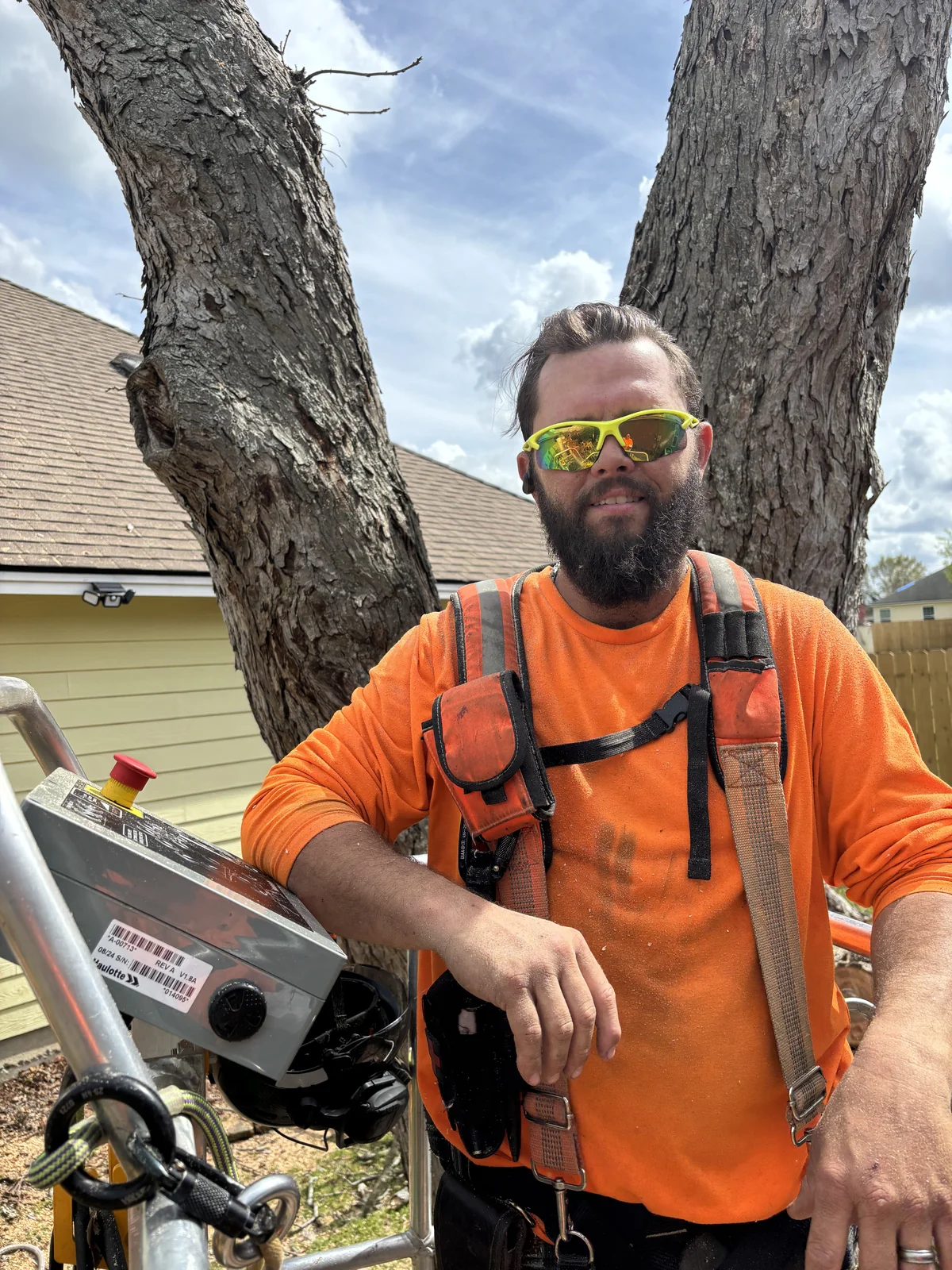
Mark Henderson
Founder & Lead Arborist (Valdosta, GA)
Identifying 'Widow-Makers' (Post-Storm Check)
We focus on the hazards hanging over your head that you might miss from the ground.
What to look for:
✹ Large dead branches caught in the upper canopy.
✹ Cracks or splits where major limbs meet the trunk (the 'union').
✹ Decaying bark that is peeling away in large sheets, exposing the wood beneath.
If you see mushrooms growing at the base of your tree, it’s often a sign of root rot. This means the tree's 'anchor' is failing. Call us for a professional assessment immediately.
Hurricane Season Prep
In the weeks leading up to hurricane season, walk your property and look for changes. A proactive removal is always safer and more cost-effective than an emergency cleanup.
General Tree Safety Tips (All Year Round)
✹ The 1/3 Rule: If more than 1/3 of the tree is hollow or decaying, it is likely a high-risk hazard.
✹ Check the Roots: Avoid construction or heavy machinery near the 'drip line' of the tree to prevent root compaction.
✹ Proximity: Any tree taller than its distance to your house should be monitored closely for structural health.
✹ Professional Eyes: Some rot happens internally. A professional 'tap test' can identify hollow spots you can't see.
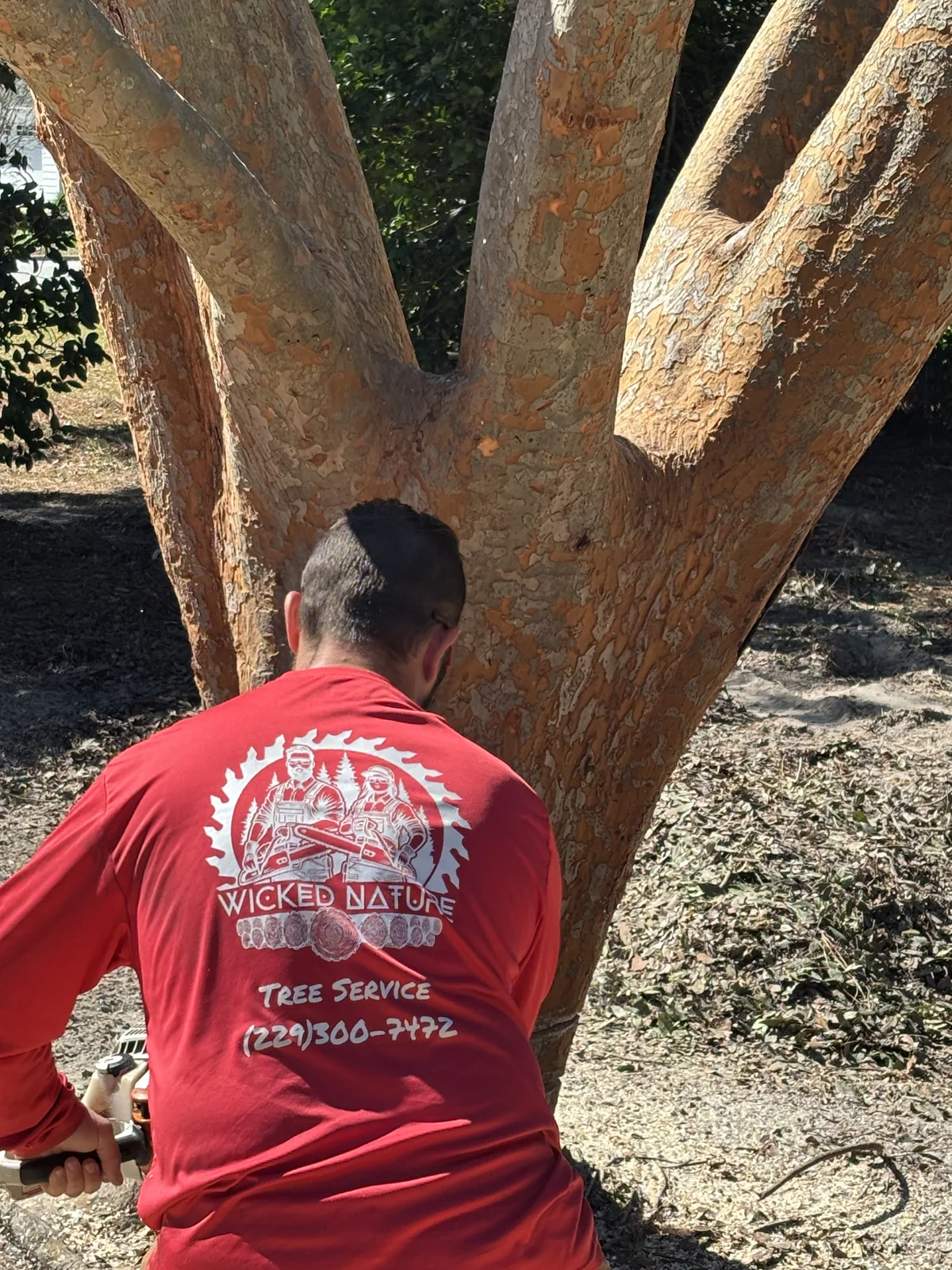
“We often see 'widow-makers'—large dead branches—that homeowners ignore. These are high-velocity hazards just waiting for a gust of wind. Safety is about proactive removal.”

Nicole Henderson
Founder & Operations Lead (Valdosta, GA)
Final Thoughts
Tree safety isn't about guesswork; it's about technical assessment. By paying attention to these warning signs, you can protect your property and ensure that your yard remains a place of safety, not a source of stress.
If you're unsure, don't risk it. Our veteran team provides honest, professional assessments to let you know if a tree needs to go or if it just needs a professional trim.
Get the Latest
Be the first to discover insider tips, cultural itineraries, and the hidden gems of your favorite destinations.
" height="21.86096809245946px" id="ChG_bEXmk" transform="translate(4 5)" width="23.147212585281636px"/></svg>)
" height="19.49996px" id="rfCXYZyRJ" transform="translate(5 6)" width="21.57301px"/></svg>)
[Blogs]
You Also Might Like